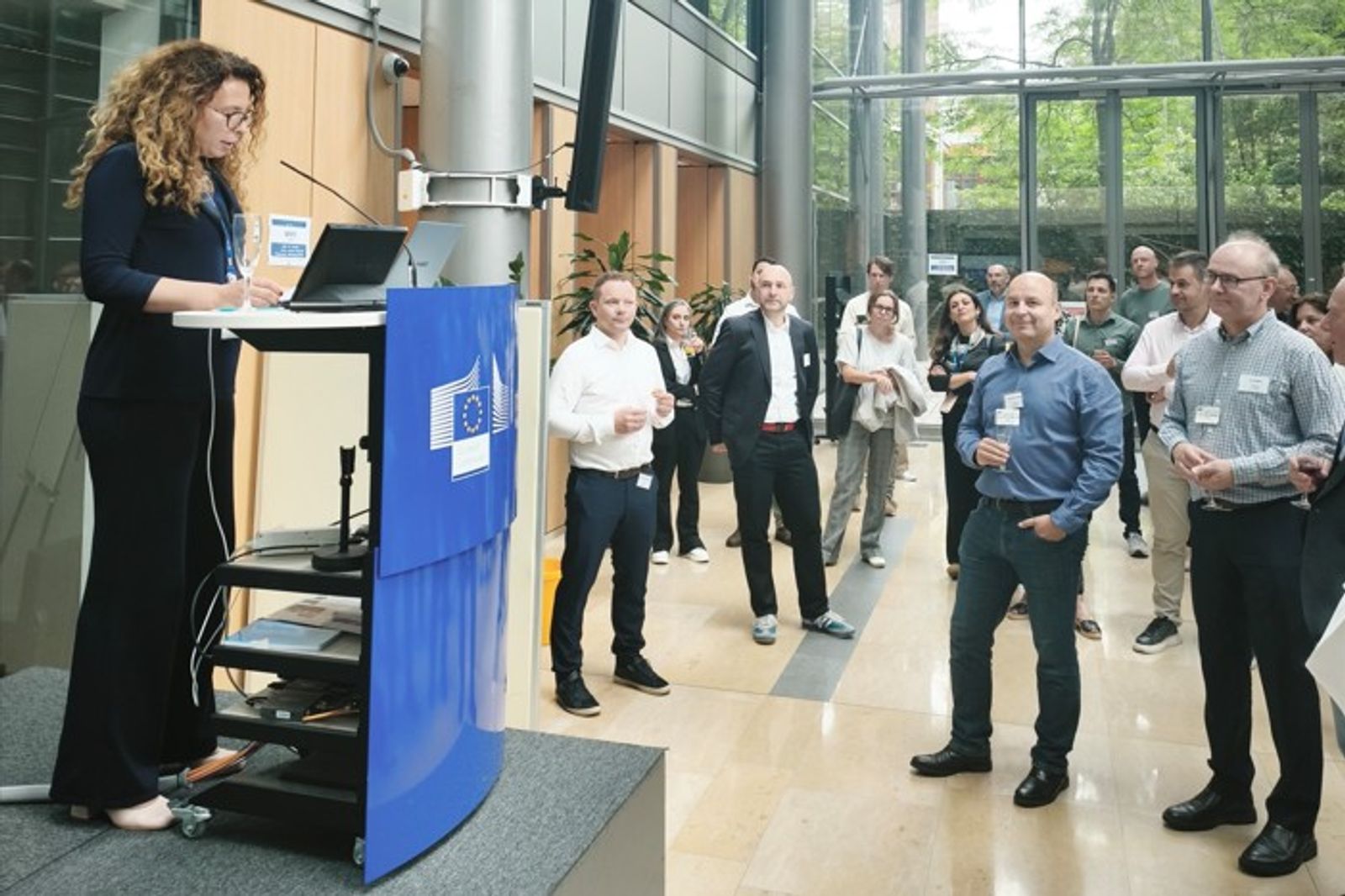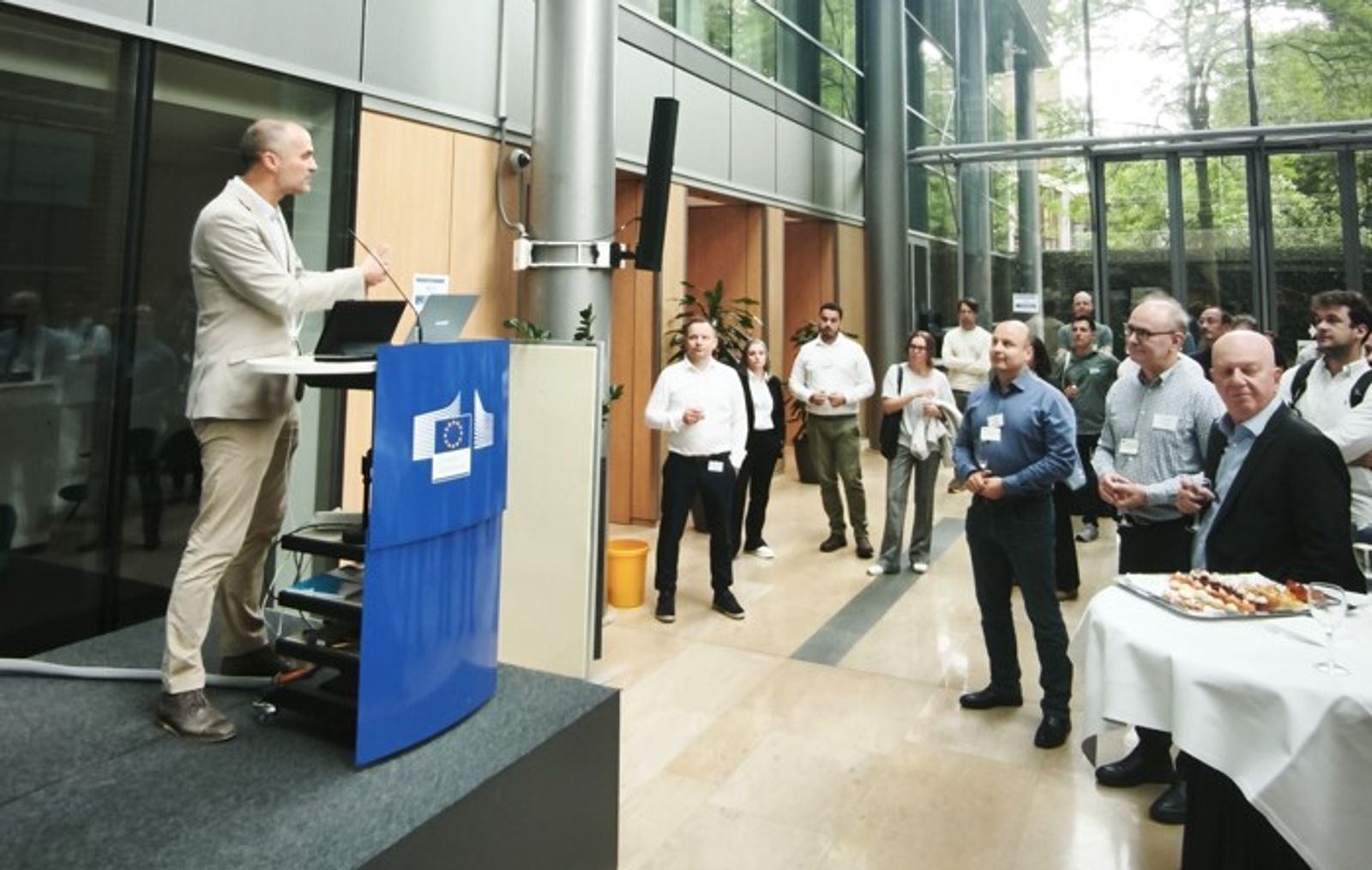

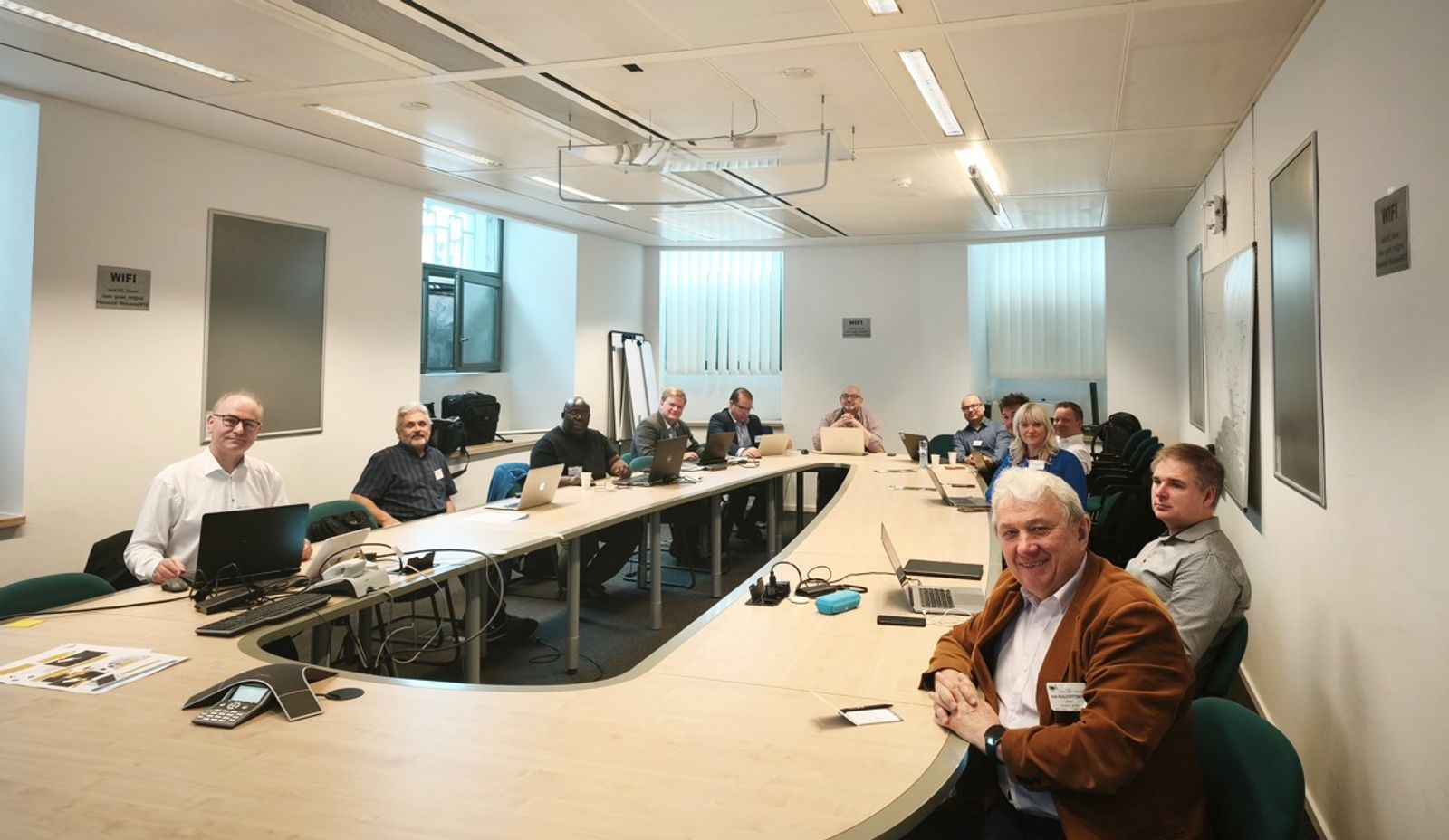
SimuLingua kicks off in Brussels
- Date
- Venue
- CDMA Building, European Commission, Brussels
- Format
- In person
- Duration
- 2-day event
Event details
- Objective / topics
- Joint Horizon Europe kick-off for SimuLingua — consortium alignment on the open multimodal SciFM roadmap, work packages, and coordination with peer projects in the cluster.
- Target audience
- SimuLingua consortium partners, European Commission project officers, and representatives of fellow newly funded Horizon Europe projects in the cluster.
- Organising body
- European Commission
- Contact person
Consortium coordination office
Event enquiries
FLOWPHYS AS — SimuLingua coordinator
- Agenda (Final)
Day 1 — Project presentation and consortium alignment
Welcome, Horizon Europe context, SimuLingua objectives, and partner introductions.
Day 2 — Work packages, use cases, and cluster exchange
Roadmap planning, use-case prioritisation, and session with peer GenAI4EU cluster projects.
Funded under Horizon Europe (HORIZON-CL4-INDUSTRY-2025-01-DIGITAL-61) as a Research and Innovation Action, SimuLingua — Simulation-Powered Computational Linguistics for Materials Foundation Models — will build an open, multimodal Scientific Foundation Model (SciFM) for materials. The model unifies text, structures, images and simulation data to accelerate discovery across design–simulate–validate loops.
At its heart is a closed loop: the model proposes candidate materials, fast AI surrogates and a multiscale simulation pipeline (DFT → phase-field → CFD/FEM) verify their plausibility and performance, and new data flows back through a FAIR knowledge graph that provides ontologies, provenance and leakage-safe data splits. A natural-language interface lets domain experts query the knowledge graph, launch virtual experiments and steer generative inverse design.
Over 48 months, SimuLingua will advance from TRL 1 to TRL 4 and validate its approach across six use cases — including lead-free electroceramics, durable glasses, high-entropy and recyclable alloys, analyte-sensitive coatings, and a device-level olfactory sensing array. As a contribution to the GenAI4EU agenda, the project aims to deliver a sovereign, reusable blueprint for physics-grounded scientific AI, with all non-restricted models, datasets and code released openly with model and data cards, DOIs and APIs.
The Brussels kick-off brought together SimuLingua's nine partners from across Europe to align on objectives and the road ahead. Coordinated by Flowphys AS (Norway), the consortium includes KTH Royal Institute of Technology, the University of Sheffield, Eindhoven University of Technology, DYCOTEC Materials, OLIVERIS Tech Incubator, Vytautas Magnus University, the Agency of European Innovations, and Thermo Challenges.