
SimuLingua highlights the role of project coordinator FLOWPHYS in advancing AI-driven materials discovery
- Date
- Category
- Project news
- Location
- Online
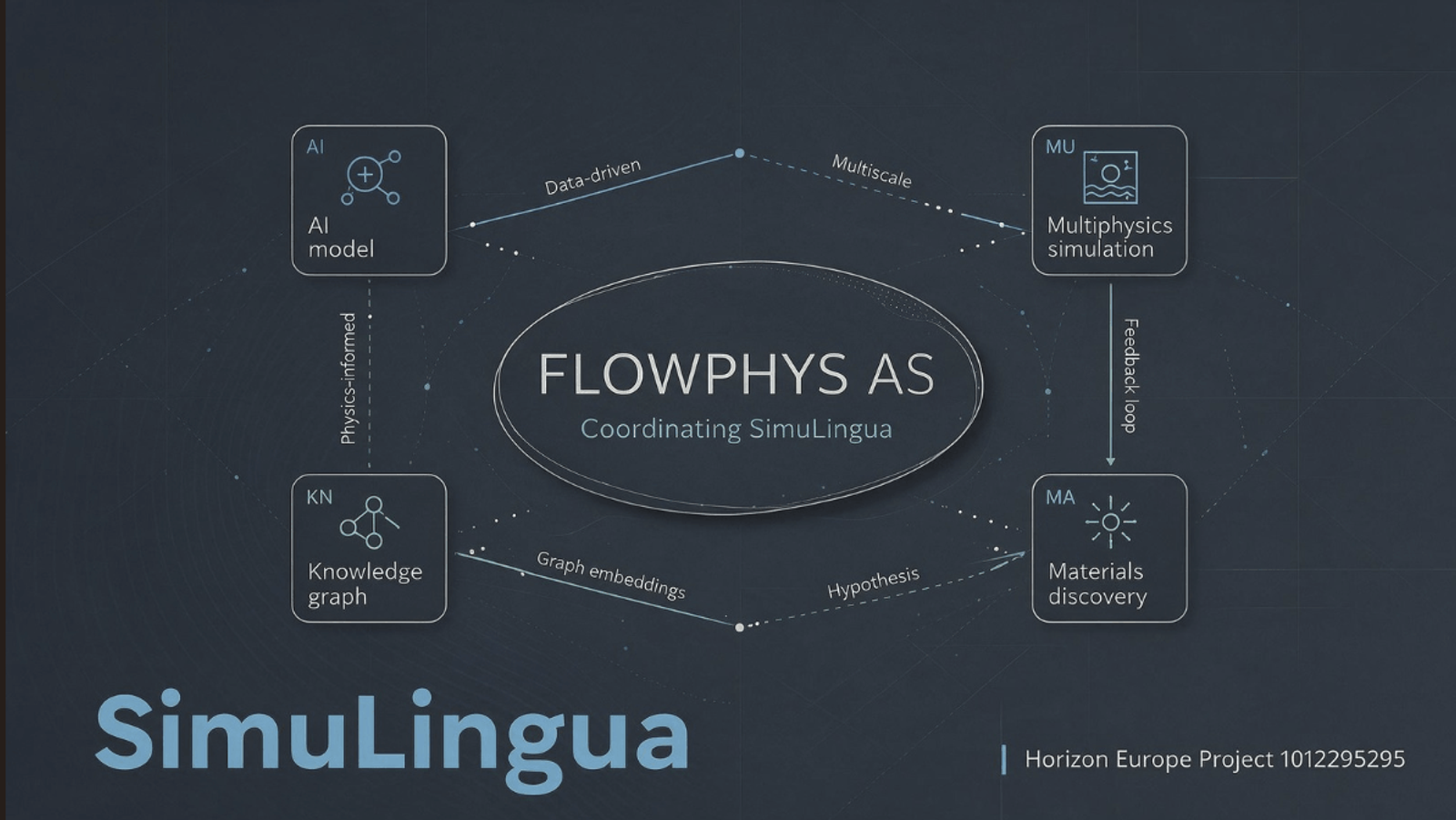
SimuLingua has published a new LinkedIn post introducing FLOWPHYS AS, the project coordinator, and highlighting the organisation’s central role in the successful implementation of the Horizon Europe project.
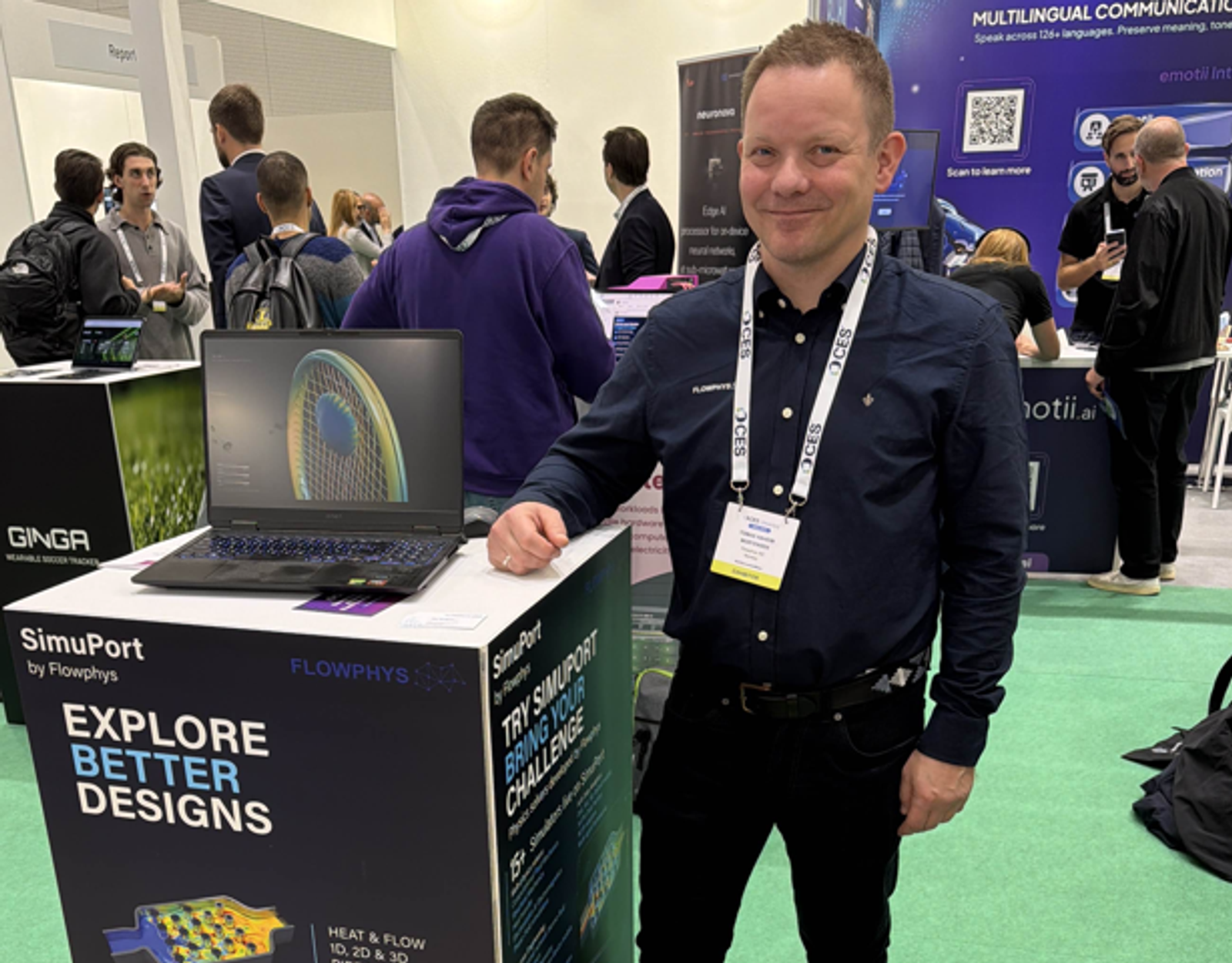
FLOWPHYS AS is a Norwegian SME specialising in multiphysics simulation software and AI-driven digital platforms. As coordinator of SimuLingua, it leads project management and governance while bringing expertise in numerical modelling, scientific machine learning and cloud software development to the consortium.
FLOWPHYS leads the AI-accelerated simulation work in Work Packages 10–12. Its activities include generating high-fidelity simulation data and developing fast surrogate models that reproduce the key outputs of computationally demanding physics simulations. The work connects material microstructure evolution, fluid flow and thermo-mechanical behaviour across different physical scales.
Working with TU/e and KTH, FLOWPHYS will integrate these models into an automated workflow to support the screening and evaluation of new material candidates. The organisation also leads platform integration and the natural-language interface in Work Packages 16–17, connecting SimuLingua’s scientific foundation model, knowledge graph and simulation tools in a unified platform.
The natural-language interface is being designed to enable researchers to describe materials requirements in everyday scientific language, run computational workflows and explore results. FLOWPHYS is also developing an active-learning engine that will use uncertainty estimates to identify the most informative additional simulations.
A practical example is the novel-glasses use case, led by the University of Sheffield with simulation support from FLOWPHYS. Computational modelling will help identify promising glass compositions for applications including durable displays and high-frequency electronic packaging, with selected candidates subsequently manufactured and tested in the laboratory.
Drawing on its FlowPhys simulation software and SimuPort cloud platform, FLOWPHYS will lead the deployment of the integrated platform and contribute to its open-source release and long-term maintenance. Its work connects physics-based modelling, AI and software engineering to make advanced materials research more accessible to researchers and industry.